
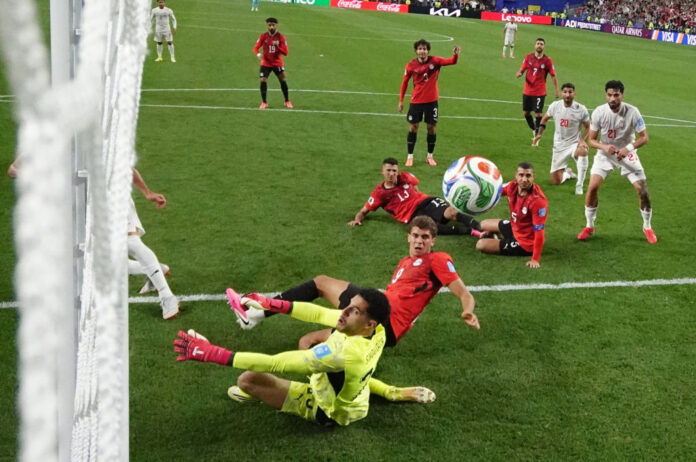

The FIFA World Cup is designed to feel endless in possibility. More teams, more matches, more chaos — and more reasons to believe almost anyone could go all the way. That’s the illusion of the knockout stage: every surviving team has already proven something, but also exposed enough flaws to justify doubt.
As the Round of 32 begins, the question isn’t just who is strong enough to win it all — it’s who can survive the contradictions that define every contender.
Below is a breakdown of why each team could win the World Cup… and why they almost certainly won’t.
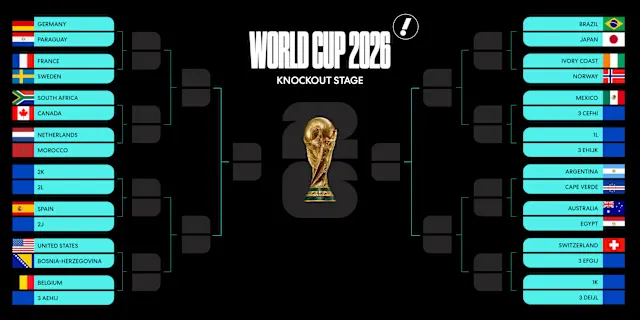
Argentina (Group J winners)
Why they will win it all
Argentina national football team continue to look built around perfect balance and elite efficiency. Even when rotating, they maintain control through structure, discipline, and moments of genius.
Lionel Messi remains the defining force. His numbers in this tournament underline a simple truth: he is still producing at a historic level, scoring and creating chances at a rate few players in history can match.
Behind him, Argentina’s system does what championship teams do best — it protects their star while maximizing his impact. The supporting cast, including Enzo Fernández and Lisandro Martínez, provides stability, ball progression, and defensive control.
They haven’t conceded a goal in the group stage, and their underlying defensive metrics suggest opponents have barely been allowed into dangerous areas.
Why they won’t
The concerns are structural rather than individual. Argentina can look passive without the ball, allowing opponents long spells of possession in safe zones that could become dangerous against elite finishing teams.
Aerial weakness also remains a problem, especially against physically dominant European sides. In knockout football, where set pieces and second balls often decide matches, this could become a decisive flaw.
Australia (Group A runners-up)
Why they will win it all
Australia national soccer team have built their identity on defensive discipline. They don’t just defend — they deny space entirely.
Their low block system forces opponents into low-quality shots, and their defensive structure ensures multiple bodies between ball and goal at almost all times.
Goalkeeper Patrick Beach has been reliable, while the back line led by Harry Souttar has been difficult to break down. In a tournament often decided by single moments, Australia’s ability to survive pressure keeps them alive.
Why they won’t
The problem is obvious: they struggle to score.
Their attacking output remains one of the weakest among Round-of-32 teams. Even when they defend well, they rarely convert transitions into goals. Against top opposition, one mistake or one missed chance could end their run instantly.
Belgium (Group G winners)
Why they will win it all
Belgium national football team still possess elite individual talent, especially in transition.
Jérémy Doku provides directness, pace, and unpredictability that can break compact defenses. When he is on form, Belgium’s attack transforms completely.
Add the experience of Kevin De Bruyne and Romelu Lukaku, and Belgium remain capable of moments of brilliance that decide knockout matches.
Why they won’t
Time is catching up.
Many of Belgium’s key players are now in the final phase of their careers. The squad lacks depth in younger elite talent, and their intensity drops significantly when key attackers are not on the pitch.
Over a full tournament, this imbalance becomes increasingly difficult to hide.
Bosnia & Herzegovina (Group B third place)
Why they will win it all
Bosnia and Herzegovina national football team bring one of the most unique physical profiles in the tournament.
They dominate aerial duels, rely heavily on set pieces, and use their physicality to disrupt rhythm. With Edin Džeko leading the line, they always carry a direct threat in the box.
In knockout football, set-piece dominance can turn underdogs into giants.
Why they won’t
Their limitation is technical progression.
They struggle to build attacks through midfield and lack the speed to counter elite defensive lines. Against organized possession teams, they often spend long stretches without meaningful attacking output.
Brazil (Group C winners)
Why they will win it all
Brazil national football team remain one of the most dangerous attacking teams in world football.
Vinícius Júnior is in elite form, capable of deciding matches alone. Around him, Brazil still have depth in wide areas and forward positions, with multiple players capable of producing match-winning moments.
At their best, Brazil can overwhelm any opponent with pure attacking talent.
Why they won’t
Balance is the issue.
The squad remains heavily attack-oriented, while defensive stability relies on aging full-backs and a midfield that is often exposed. Against structured, high-pressing teams, this imbalance becomes a liability.
In knockout football, chaos alone is rarely enough.
Canada (Group B runners-up)
Why they will win it all
Canada national soccer team thrive on intensity and transition speed.
They play vertical football, winning possession high up the pitch and attacking quickly before defenses can reset. Jonathan David and Cyle Larin provide efficient finishing in transition moments.
When their system clicks, they can overwhelm opponents in short bursts.
Why they won’t
Their style is high-risk.
Modern elite teams are increasingly comfortable absorbing pressure and breaking fast transitions. Against tactically disciplined opponents, Canada can struggle to control games or create sustained pressure.
Cape Verde (Group H runners-up)
Why they will win it all
Cape Verde national football team are the tournament’s ultimate defensive surprise.
They defend with discipline, intensity, and structure. Goalkeeper Vozinha has been outstanding, and their collective defensive organization has already frustrated elite opposition.
They don’t need dominance — they need survival.
Why they won’t
The attack is limited.
They rely on isolated moments rather than sustained creation. Against elite teams like Argentina, chances will be rare — and inefficiency at this level is usually fatal.
Final takeaway
The Round of 32 is where hope meets reality. Every team has a version of a path to the trophy — defensive resilience, superstar brilliance, tactical identity, or physical dominance.
But knockout football has a simple rule:
you can survive on your strength, but you lose because of your weakness.
And in this tournament, every team has both.