
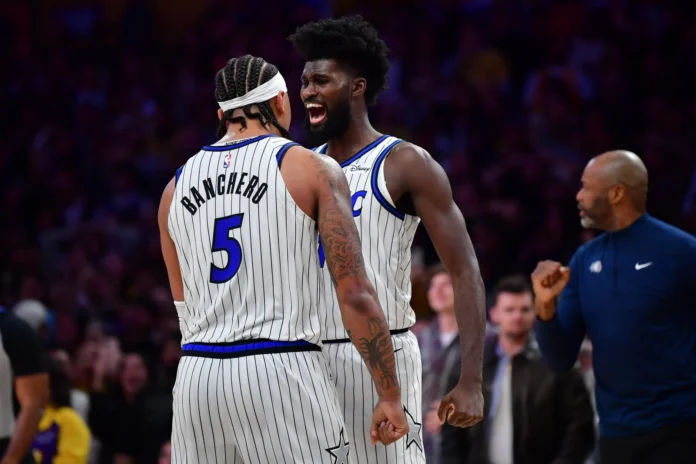

The NBA offseason continues to reshape team financial flexibility as the Orlando Magic made a notable roster decision on Saturday, waiving forward Jonathan Isaac ahead of his contract guarantee date.
The move is less about on-court production and more about salary-cap structure, roster flexibility, and long-term financial planning — all critical themes heading into NBA free agency 2026.
💰 What happened: Isaac waived before guarantee date
Jonathan Isaac was set to have his $14.5 million salary guaranteed on June 28, but Orlando chose to waive him before that deadline.
Financial impact:
- Magic save approximately $6.5 million immediately
- Remaining ~$8 million becomes dead money obligation
- Orlando does not stretch the contract over multiple seasons
- Preserves future flexibility and avoids long-term cap penalties
This type of move is increasingly common under the modern CBA, where teams prioritize future cap optionality over short-term roster retention.
🧠 Why Orlando made this decision
The Magic’s front office is operating with a clear long-term strategy:
1. Cap flexibility for a rising core
Orlando is building around a young foundation, and preserving cap space allows them to:
- Extend key young players
- Target free agents or trade upgrades
- Maintain apron flexibility under the new CBA rules
2. Injury risk vs. production balance
Isaac’s production has never fully matched his draft status due to recurring injuries:
- Missed entire 2020–21 and 2021–22 seasons (ACL recovery)
- Played only 70+ games twice in nine seasons
- Limited availability again in late 2025–26 season
Last season:
- 2.6 PPG
- 2.5 RPG
- Missed final 22 regular-season games
- Missed playoff series vs. Detroit
📉 The Isaac timeline in Orlando
Drafted 6th overall in 2017, Isaac was once viewed as:
- Elite defensive prospect
- Versatile switchable forward
- Potential long-term core piece
However, his career in Orlando has been defined by:
- Long injury absences
- Role fluctuation
- Reduced offensive usage
Despite flashes of defensive impact, durability concerns ultimately limited his long-term value to the franchise.
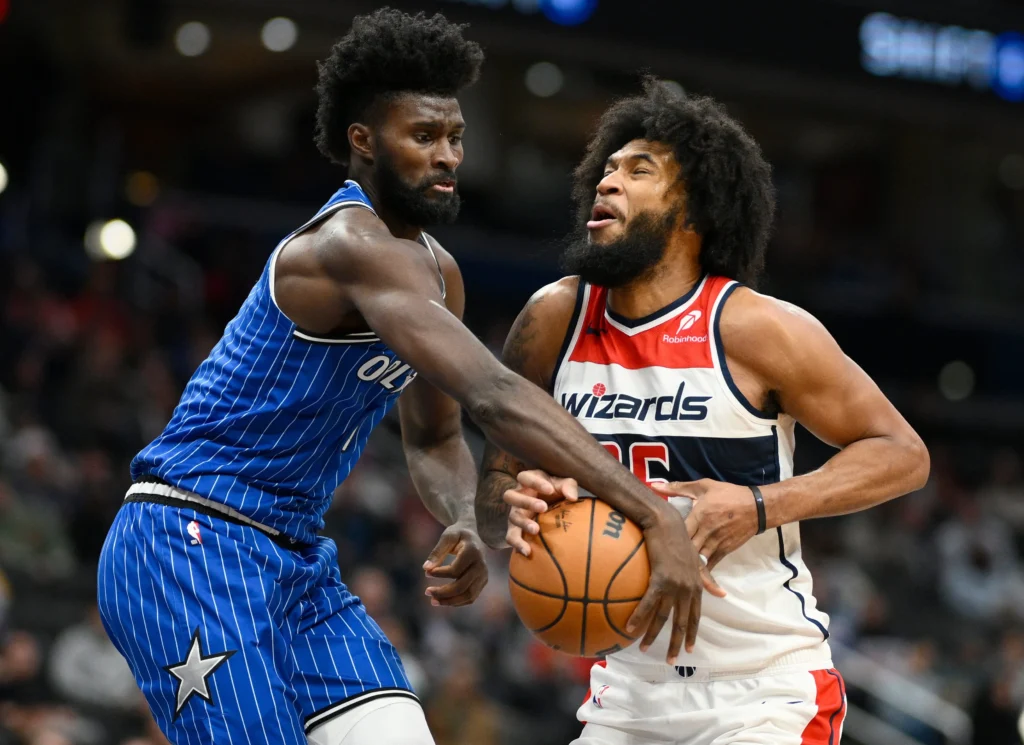
💡 Strategic salary-cap angle (important for 2026 offseason)
This move reflects a broader NBA trend:
Modern cap management priorities:
- Avoid fully guaranteeing mid-tier contracts early
- Maintain space under first and second apron thresholds
- Convert roster spots into flexible cap mechanisms
- Delay long-term financial commitments until free agency clarity improves
For Orlando, this waiver:
- Creates short-term breathing room
- Helps avoid roster stagnation
- Signals potential activity in free agency or trade market
🔄 What happens to Isaac now?
Even though waived, Jonathan Isaac still has multiple possible paths:
Potential outcomes:
- Signs minimum or mid-level deal with another NBA team
- Joins a contender needing defensive depth
- Remains a low-risk reclamation project
- Returns to Orlando in theory (depending on financial structure and timing)
Because Orlando did not stretch his contract, he remains more financially flexible for both sides.
📊 How this fits into NBA-wide offseason trends
Isaac’s waiver is part of a wider pattern in 2026 free agency:
1. Dead money management is becoming strategic
Teams now:
- Avoid long-term “stretch” penalties
- Prefer short-term cap hits for flexibility
2. Mid-tier contracts are the new battleground
Players like Isaac are increasingly:
- Waived early
- Renegotiated in free agency
- Used as cap balancing pieces
3. Teams are prioritizing optionality over certainty
Front offices prefer:
- Open cap lanes
- Trade flexibility
- Room for in-season moves
🔮 Impact on Orlando Magic’s offseason
For the Orlando Magic, this move suggests:
- Aggressive financial positioning for summer 2026
- Possible pursuit of rotation upgrades
- Continued commitment to young core development
- Flexibility for trades or exception use
Orlando is now better positioned to:
- Enter free agency without salary constraints
- Absorb contracts in trades if needed
- Maintain space under apron restrictions
🏁 Bottom line
Jonathan Isaac’s departure is less a basketball decision and more a cap management signal.
For Orlando:
- Short-term loss of depth
- Long-term gain in flexibility
For Isaac:
- A reset opportunity in free agency
- A chance to reestablish value outside a crowded, developing roster
In today’s NBA, moves like this are becoming standard — where financial agility often matters as much as on-court production.