
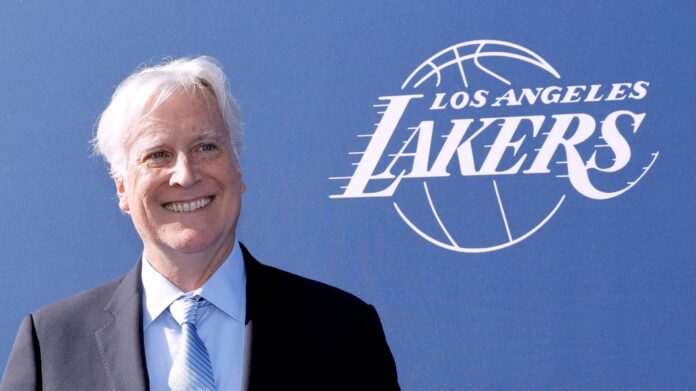

Mark Walter bought the Los Angeles Lakers for $10 billion in October 2025 and sold them for $12.5 billion less than a year later. He made a tidy profit. By most accounts, he did not leave a great impression.
A detailed report from Dan Woike of The Athletic has pulled back the curtain on what Walter’s tenure actually looked like from inside the organization — and the picture isn’t particularly flattering. According to sources across multiple departments, Walter’s brief spell as majority owner brought layoffs, steep ticket price hikes, and a front-office culture shift that left a significant number of employees cold. One well-placed league source summed it up bluntly: “It was a weird vibe last year.”
The friction, according to the report, was largely rooted in how Walter chose to reshape the Lakers’ front office. As the controlling owner of the Los Angeles Dodgers, Walter arrived with a formula that had worked in baseball — heavy analytics, data-driven decisions, and a business model built around efficiency. He brought Dodgers executive Lon Rosen over to oversee the business side of the Lakers and had other baseball-side advisers consulting on how to restructure the front office. The problem, sources suggest, is that the approach was pushed through with an arrogance that rubbed people in basketball operations — and reportedly in the locker room — the wrong way. Several sources described being turned off by the idea that a Dodgers blueprint could simply be transplanted into an NBA franchise with a completely different history, culture, and set of demands.
“It was a weird vibe last year.” — A well-placed league source, speaking to The Athletic
The most visible consequences of Walter’s bottom-line approach were felt by the workforce directly. The Lakers went through multiple rounds of layoffs after the ownership transition from the Buss family, as Walter’s team began reorganizing priorities and eliminating what it saw as redundancies. Season-ticket prices also rose sharply — some packages by more than 40 percent — a move that strained the relationship between the franchise and its longtime fanbase. On the basketball side, few of Walter’s intended changes actually made it off the ground before he sold the team. His tenure was simply too short for any structural overhaul of the on-court product to take hold.
The news of his sale to former Disney CEO Bob Iger and venture capitalist Josh Kushner earlier this month stunned the NBA ownership world. People around the league noted that owners don’t typically buy franchises and flip them within a year, and several Eastern Conference executives suggested to reporters that factors well beyond basketball must have driven the decision. Reports have since surfaced that a federal investigation into Walter’s business practices may have played a role — though nothing has been confirmed publicly.
As for the employees left behind, the mood is complicated. Most staffers, having already weathered the Buss-to-Walter transition, reportedly met the latest ownership change with more fatigue than shock. Some expressed genuine optimism about the Iger and Kushner era. Others are simply bracing for another round of uncertainty. For now, Jeanie Buss remains the operating governor, the sale is still working through its due diligence phase, and the Lakers are carrying on as if nothing has changed — even if, for the people inside the building, it very clearly has.